A cone sleeve is a small piece of packaging that quietly does three jobs at once: it keeps a customer’s hand clean, it makes a handheld snack look finished, and it puts your name in the photo. The catch is that a sleeve sized for a scoop shop’s waffle cone is wrong for a fry stand’s paper cone, and the material that suits a churro cart is not the one you want for a compostable-focused dessert brand. Rather than a single spec, choosing a sleeve is a matter of matching the wrap to the thing it holds and the place it is served. This guide walks through the common use cases and what changes between them.
Work from the application inward. Decide what is going in the sleeve, how tall or messy it is, and where it is handed over, and the size, coverage, and material fall out of those answers. Here are the main cases most food businesses land in.
What the sleeve is actually doing
Before the size, it helps to be honest about the job. For a dripping ice cream cone, the sleeve is mostly a barrier and a grip, so coverage and a little grease resistance matter more than looks. For a dry snack in a paper cone, it is mostly a holder and a billboard, so shape and print quality lead. For a hot, greasy item like fries or churros, the sleeve has to resist oil without going translucent or soft. Naming the primary job first keeps you from over-speccing a fancy material where a simple collar would do, or under-speccing where grease will defeat a plain paper.
Scoop shops: wafer and sugar cones
Cake and wafer cones are the light, flat-bottomed classics. Because they are shorter and the ice cream sits mostly up top, a shorter sleeve or a collar-style half-wrap often covers the job, catching the first drips and giving a clean place to grip. Sugar cones are a little taller and denser, built to hold stacked scoops, so they tend to want a sleeve that reaches a bit higher up the cone. In both cases the mess is moderate and predictable, which means you can prioritize a smooth printable surface and a snug wrap over heavy grease barriers.
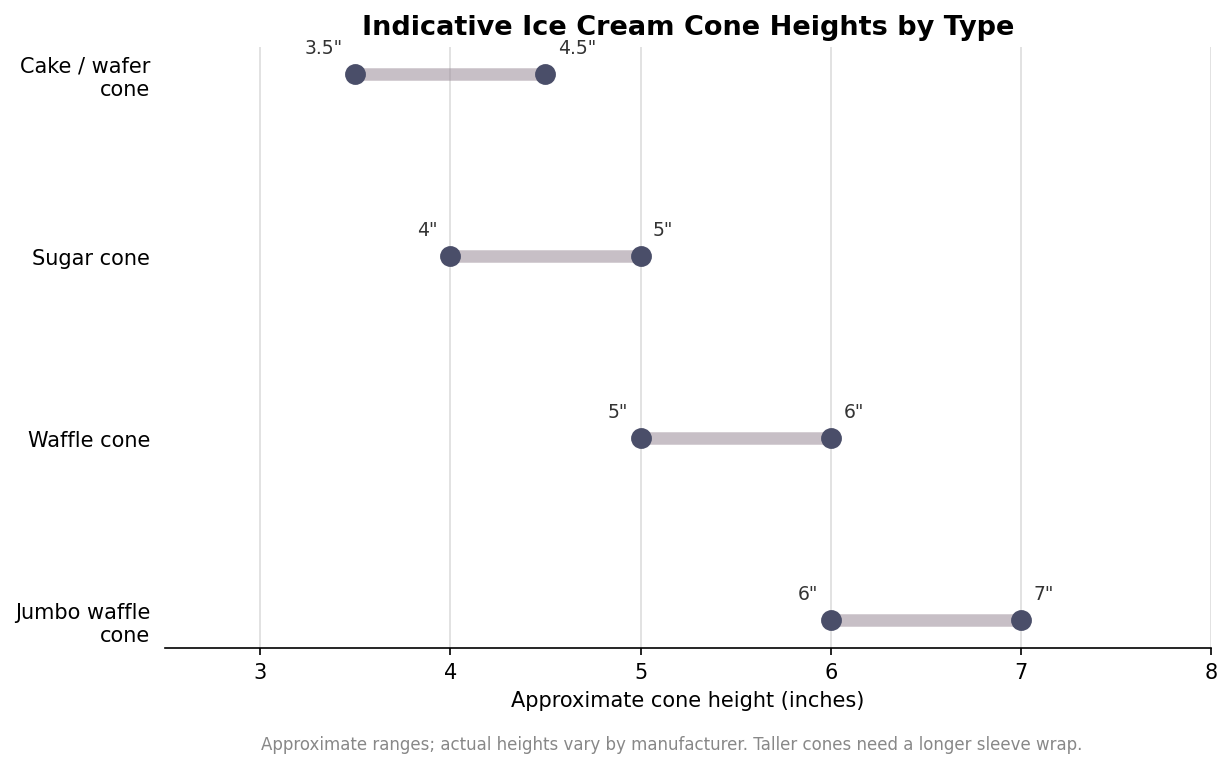
The practical takeaway from cone height is that the sleeve wrap has to grow with the cone. A collar that looks right on a 4-inch wafer cone leaves too much of a 6-inch waffle cone exposed. If you serve more than one cone type, either standardize on a sleeve sized for your tallest cone or stock two lengths rather than forcing one size onto everything.
Waffle cones and loaded desserts
Waffle cones are the big, fluffy ones with the jagged lip, and jumbo versions push past six inches. They also melt the most dramatically, since they carry more ice cream and get handled longer. This is the case that most wants a full-height wrap and a material with some grease and moisture resistance, so a long melt does not soak through onto the customer’s hand. A PLA-coated or otherwise moisture-resistant paperboard earns its place here in a way it does not on a quick wafer cone. If your signature item is an overloaded waffle cone photographed for social media, the sleeve is doing double duty as mess control and as the frame around your product, so it is worth the upgrade.
Fry stands, churros, and street-food cones
Open-top food cones are a different animal. Here the cone itself is the container, holding fries, churros, popcorn, or a snack mix, and the concern is grease resistance and capacity rather than melt. These come in a range of sizes, from small snack portions up to sharing sizes, and the right one is a matter of portion volume, not height. Grease-resistant or coated stock is close to mandatory, because a plain sheet will darken and weaken within minutes of contact with hot oil. Food-safe, food-contact-rated material is the baseline, not an upgrade, for anything that touches the food directly.

Capacity is the spec that trips people up on savory cones. A cone that looks generous empty can hold less than expected once you account for the taper, so size to the portion you actually serve rather than to how the empty cone looks. If you run a set menu, match a cone size to each item rather than buying one middle size and hoping it works for both a small snack and a loaded portion.
Then choose the material for the setting
Once the size and coverage fit the application, the material is largely about grease demands and brand positioning. White paperboard gives the smoothest, most vivid print and suits dessert brands that want bright artwork. Kraft reads natural and works for brands leaning into a rustic or sustainable look, though it shows grease more readily. PLA-coated paper is the plant-based, compostable option with real moisture resistance, which makes it a strong fit for messy items at eco-minded businesses, while PE-coated stock is the most durable but rates lower on compostability. Whichever you pick, water-based, food-contact-safe inks and food-grade stock are the non-negotiables for anything served to eat.
The through-line is that there is no universal cone sleeve, only a right sleeve for a given cone in a given setting. Start from what you are serving and where, let that set the size and coverage, and treat the material as the final adjustment for grease and brand rather than the first decision. Match those three to the application and the sleeve will keep hands clean, hold its shape, and make the snack look like it was meant to be handed over that way.